Horizontal enterprise AI platforms operate under a flawed assumption: that every company in the same industry works the same way and that all business intelligence exists in static documents. In reality, two direct competitors in the same market make fundamentally opposing operational trade-offs, one prioritizing rapid execution, the other prioritizing cost minimization or risk containment. When both organizations deploy the same generic model, the software enforces average, middle-ground decisions that erode each company’s distinct competitive advantage.
The Company-Specific Knowledge Gap
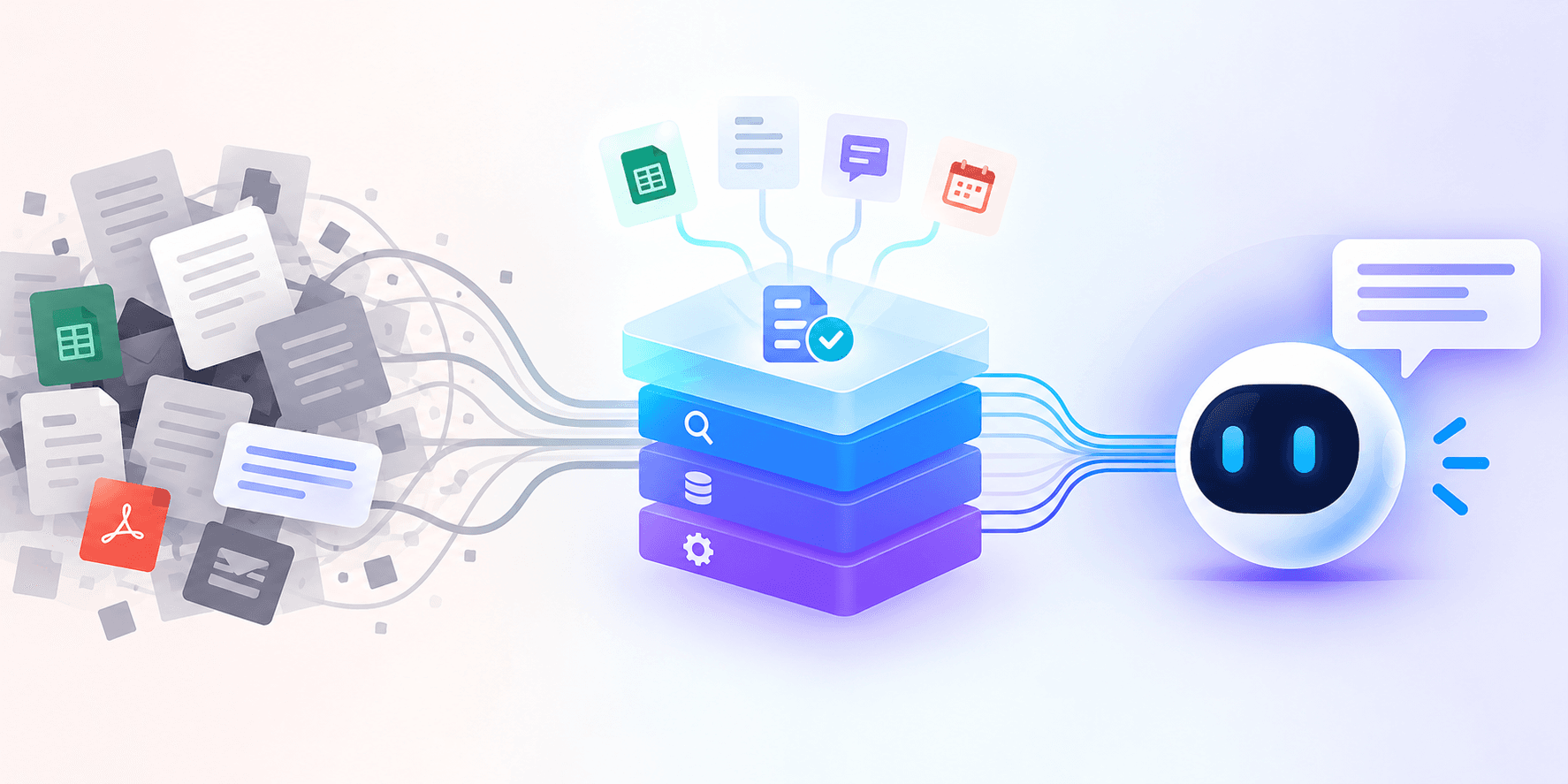
Industry-specific AI provides a foundation, but it does not capture everything that makes a company different. Important business knowledge often exists in internal decisions, employee expertise, exception handling and undocumented practices.
Three gaps make generic AI insufficient:
- Generic Wrappers vs. Vertical AI: Off-the-shelf horizontal models perform basic document retrieval, but stall when required to make complex, real-world business trade-offs.
- Company-specific knowledge: Each organisation has its own customer data, internal information, terminology and expertise.
- Different decision rules: Pricing, approvals, risk limits and exception handling vary between companies, even within the same industry.
- Different business priorities: One company may prioritise speed, while another focuses on cost control, accuracy or risk reduction.
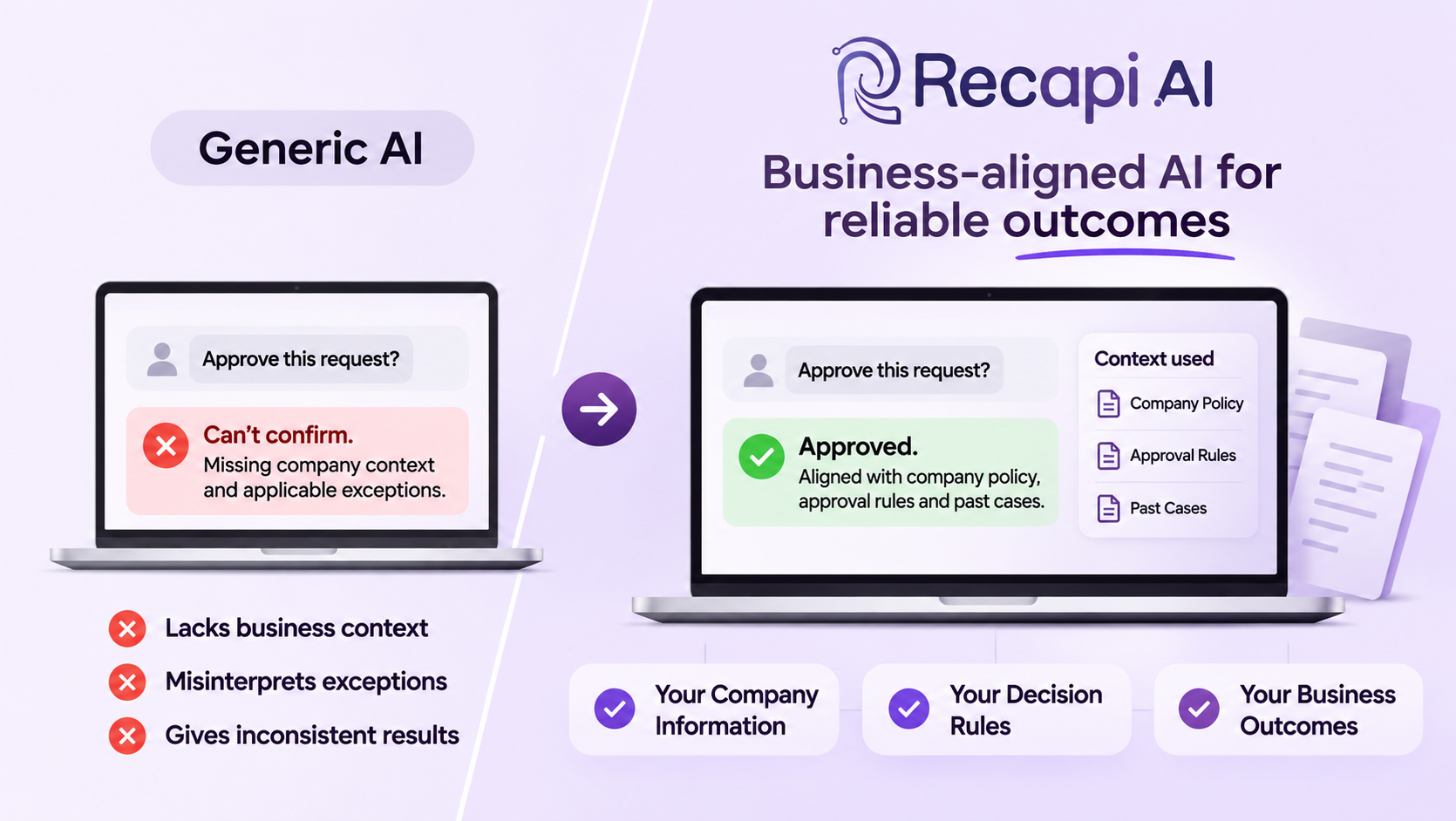
Without this context, general-purpose AI can provide relevant information without making decisions that fit the company's requirements.
Why General-Purpose AI Is Not Enough
The current architecture of AI, built around generalised training, is not designed to deliver deterministic, company-specific outcomes. These models learn broad patterns and generate probabilistic outputs, whereas businesses require decisions governed by specific knowledge, rules, constraints and expected outcomes. Adding company documents provides context, but does not by itself make the system's decisions consistent or predictable.
How Recapi Builds Domain-Specific AI Systems
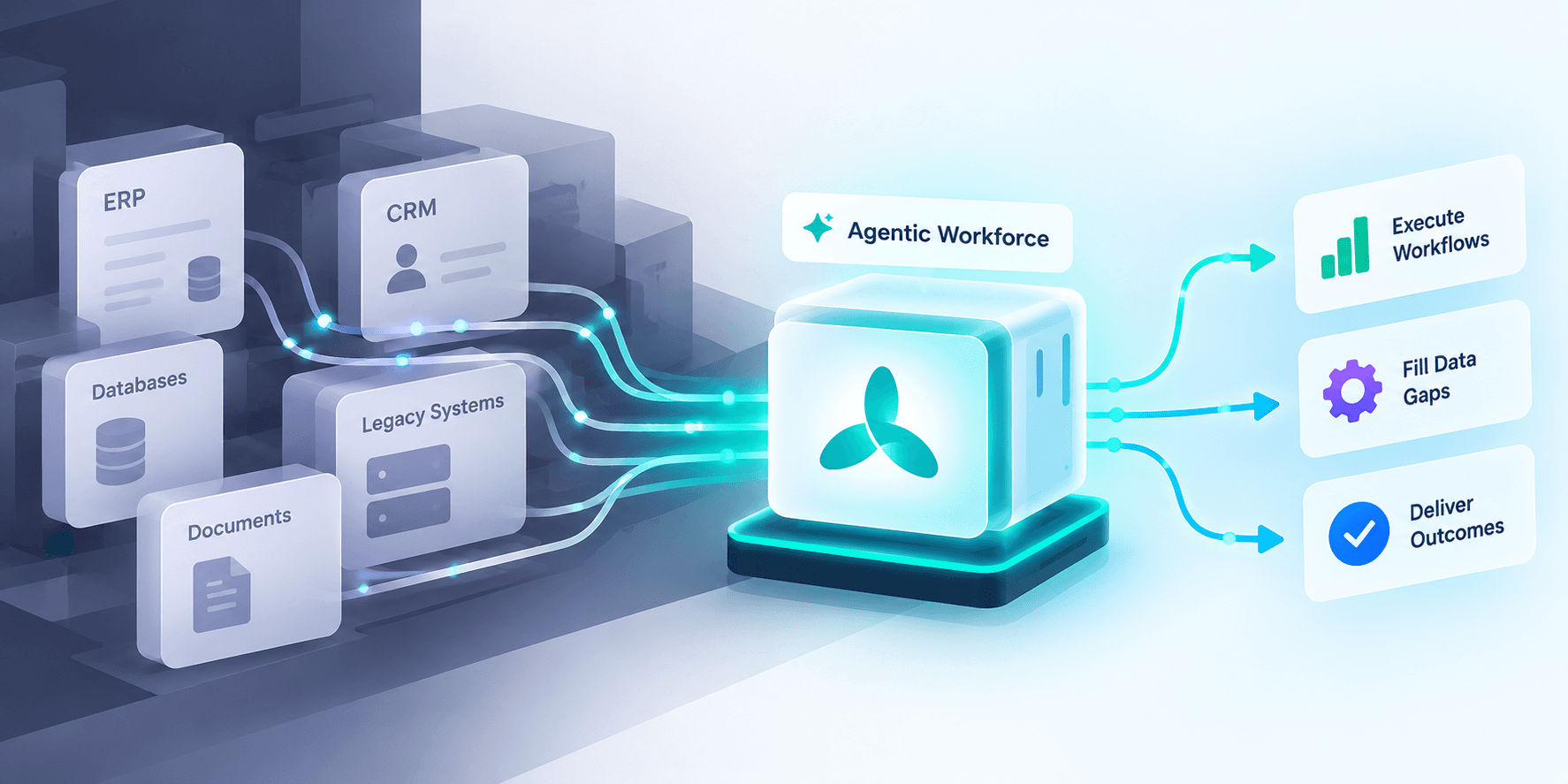
Recapi provides reusable AI infrastructure for building, training, evaluating and deploying domain-specific AI systems. It helps companies move from general AI capabilities to systems shaped around their own business requirements.
Its key capabilities address this through:
- Domain-Specific Intelligence: Aligns AI with industry-specific training data, proprietary knowledge, business context and company models.
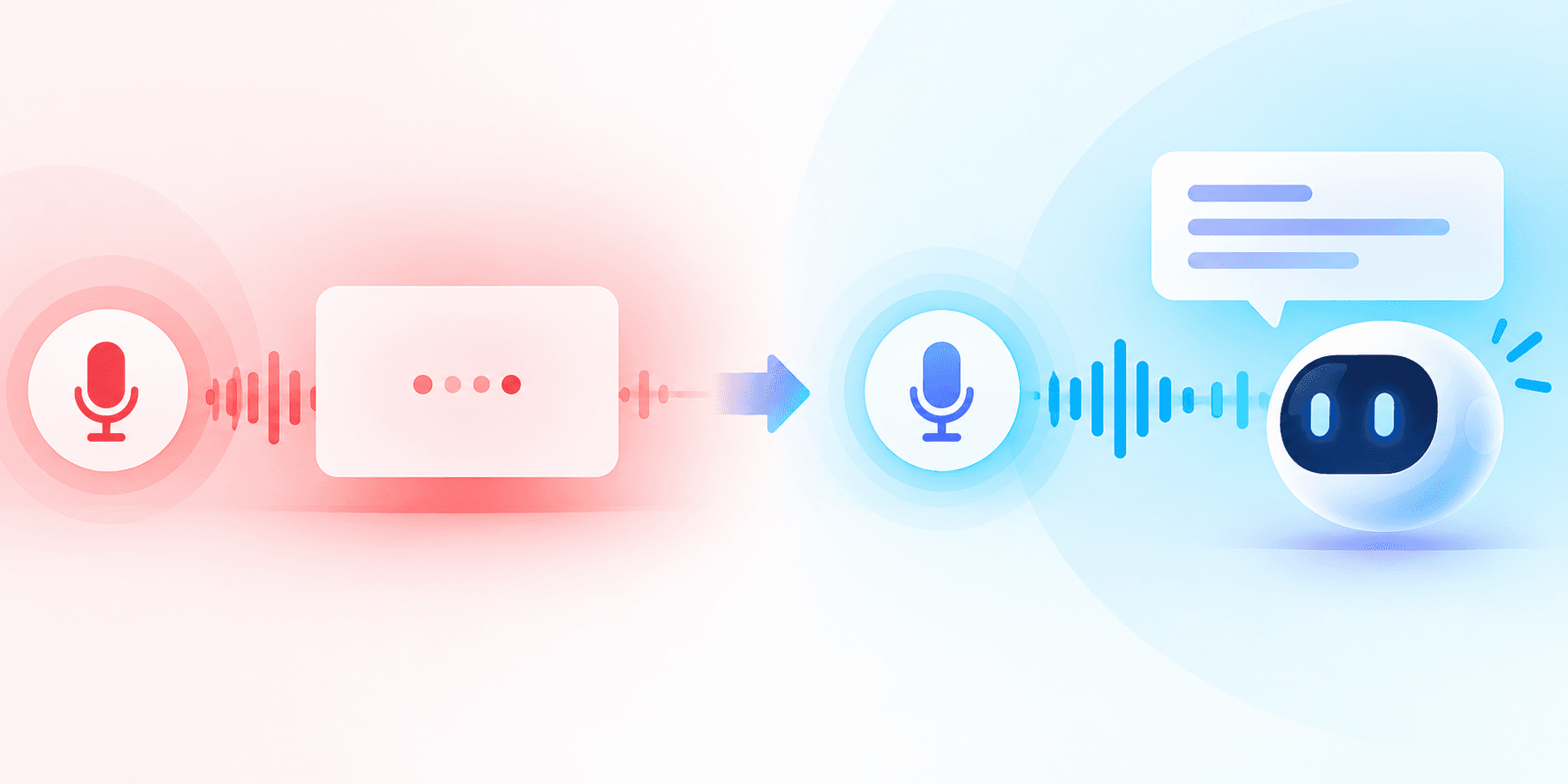
- Multimodal Simulation Engine: Observes employee demonstrations, interacts through voice and conversation, asks targeted questions and identifies missing business knowledge. It helps convert captured expertise into structured training material.
- Self-Learning AI Systems: Uses feedback and performance evaluation against defined outcomes to support system improvement.
- Proactive, Outcome-Driven Execution: Aligns system behaviour with the results a company expects to achieve.
- Enterprise Ownership: Supports on-premise and private-cloud deployment, giving companies control over their models, data and infrastructure.
- Forward Deployment: Helps configure and integrate domain-specific AI within the company's existing environment.
The Simulation Engine: Capturing What Company Documents Miss
The Multimodal Simulation Engine is one of Recapi’s key differentiators. It goes beyond existing documents by observing how employees perform tasks, engaging them through voice interactions and asking targeted questions to uncover undocumented expertise, decision logic and exceptions. It identifies gaps in available knowledge and helps convert captured insights into structured training material, while generating scenarios to test how well the AI system handles real business situations.
The Future of Enterprise AI Is Company-Specific
As AI adoption grows, the gap between companies that simply use AI and those that build it around how their business actually operates will become increasingly significant. Access to capable models alone will not be enough to sustain a competitive advantage. Businesses will need AI systems grounded in their own knowledge, decision-making and operating requirements. This shift will shape which companies can adapt, compete and grow as AI becomes central to business operations. Recapi is built for this shift.
Build AI Around Your Company's Requirements
Generic AI struggles to deliver domain-aligned, deterministic outputs at scale, where compute costs and economic feasibility depend on specialised domain training.
Explore how Recapi's reusable AI infrastructure and Multimodal Simulation Engine can help build AI for your specific business requirements.
"Why Companies in the Same Industry Need Different AI Systems represents a significant milestone in our ongoing search for excellence. Implementing these strategies has fundamentally shifted our operational efficiency."
Recapi Team
Expert Insights